Desktop UV Printer Comparison: Six Machines, Eight Real Differences
Here's the secret spec sheets hide: these six machines are mostly the same machine. All of them are Epson piezo printheads jetting CMYK, white, and varnish UV ink at an object. What actually separates them is architecture — eight subsystem choices that change what you can make, how fast, what it costs to run, and whether it still prints in month six.
Prices verified against first-party pages August 13, 2026; Morpho campaign terms refreshed August 21. Manufacturer claims are labeled as claims; measured numbers come from our own bench testing.
The lineup
Each machine genuinely occupies its own niche — which is rare, and makes this comparison about routing you to the right one, not crowning a winner.
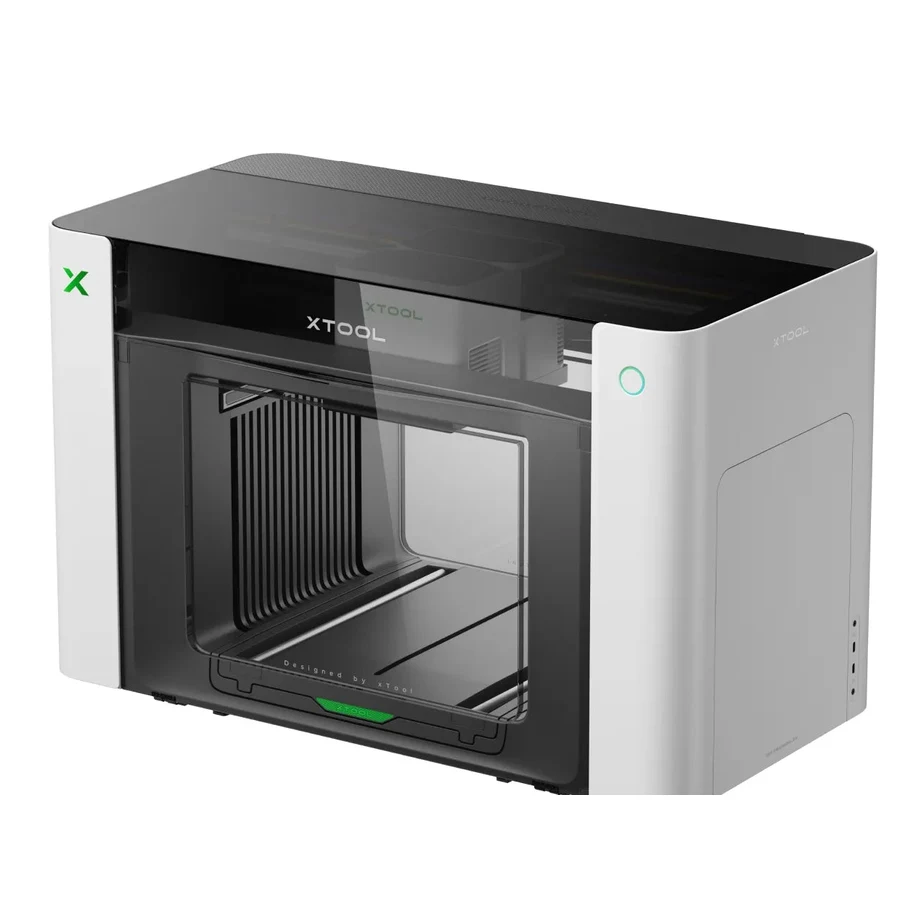
The ecosystem play
xTool O1 Omni
Pre-order$1,899–2,999
official variant pricing (Single / Dual / DT+UV)
Makers who want the broadest edition and accessory ecosystem, plus line-scan placement accuracy.
Biggest risk: Edition complexity and edition-dependent consumable wet paths.
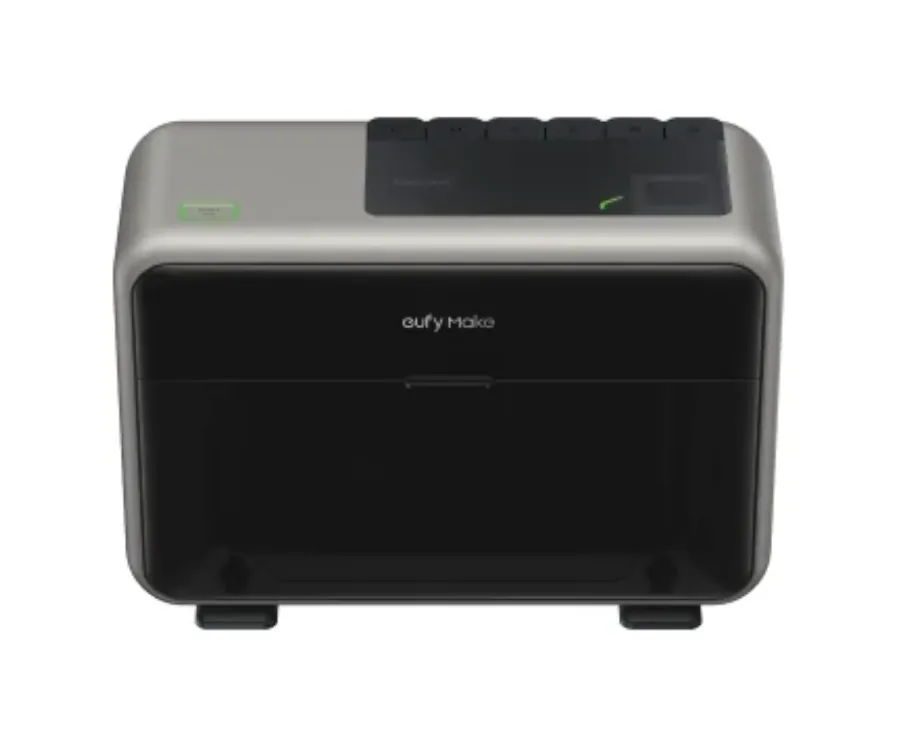
The proven beginner path
eufyMake E1
Shipping now$2,109
printer only, official page; ink excluded
Beginners who value guided maintenance and the best-documented cartridge economics and field modules.
Biggest risk: Chipped cartridge lock-in and ongoing maintenance-fluid cost.
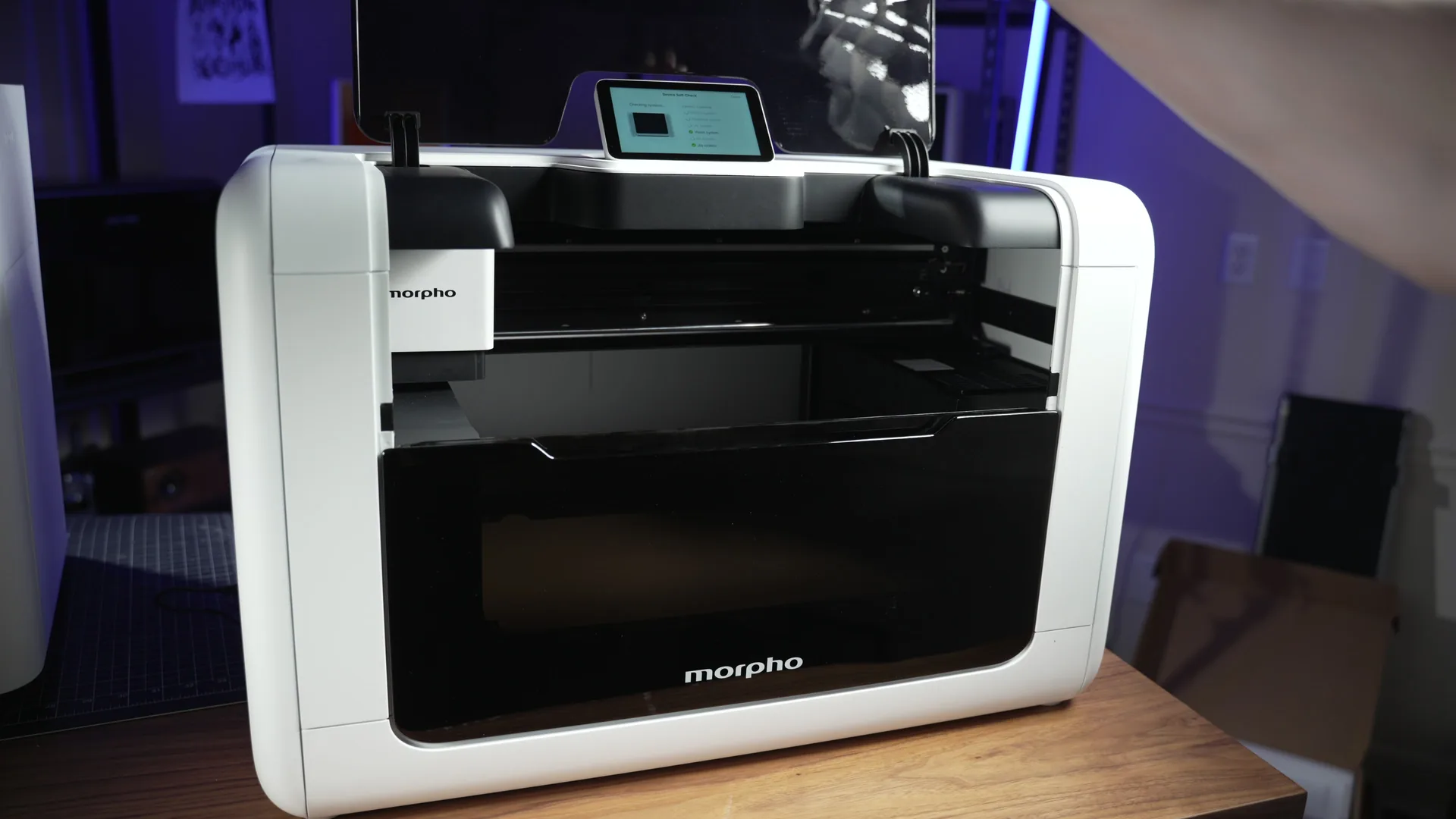
The open production platform
Morpho
Live Kickstarter$1,599 / $2,799
Standard / Pro VIP Kickstarter reward prices View campaign
Small businesses that value throughput, open refillable ink, fixtures, and built-in color measurement.
Biggest risk: Kickstarter and service maturity; maintenance and lifespan claims are unproven.
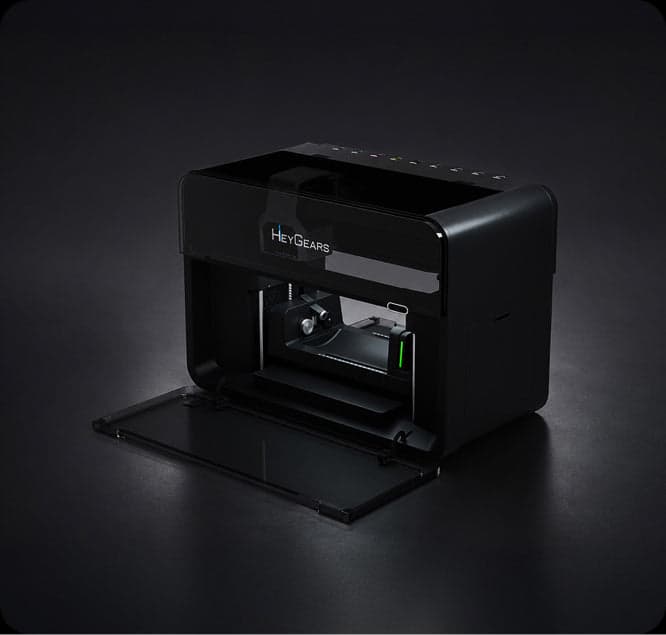
The only true full-color 3D
HeyGears G1X Full-3D
Live Kickstarter$3,599
G1X Full-3D Pack, live Kickstarter; G1 Starter $1,999, G1X Starter $3,299 View campaign
Buyers specifically needing the only defined, supported full-color resin material-jetting system.
Biggest risk: Beta units print small 3D models in 26–27 hours vs the ~1.5-hour production claim; latest-shipping machine here (Dec 2026 / Mar 2027).
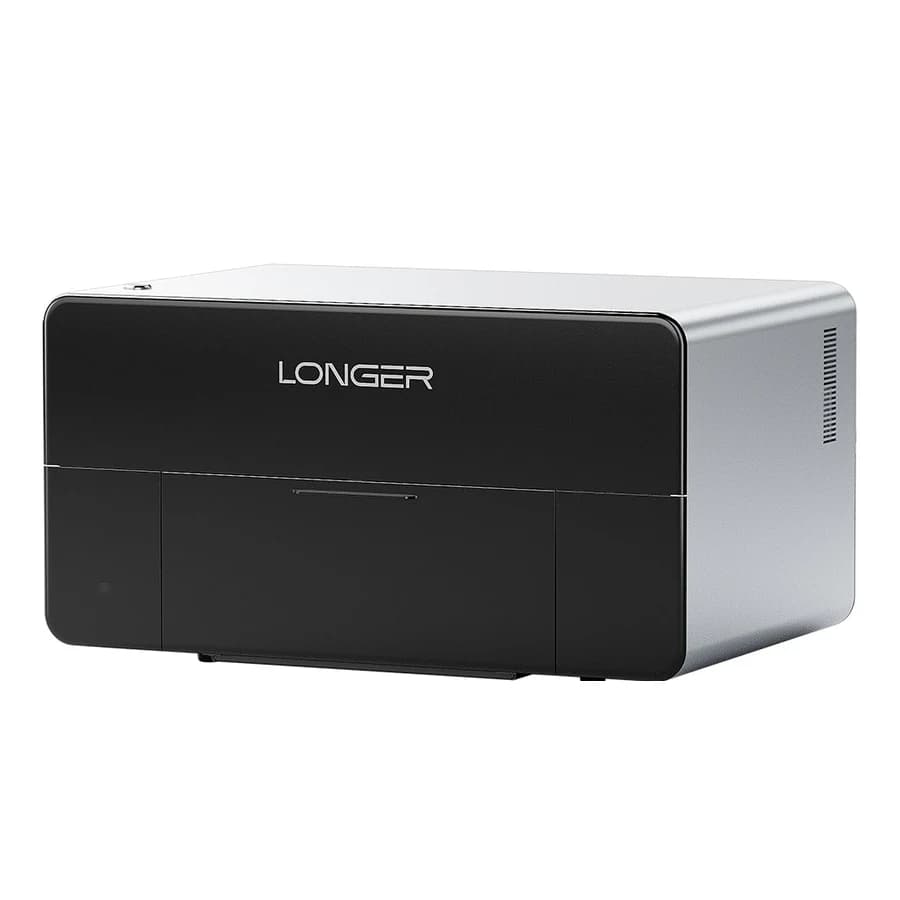
The open tinkerer's dual-head
Longer ePrint Dual
Pre-order$2,499
official dual-head starter variant
Experienced operators who want open dual-head production flexibility at the lowest dual-head price.
Biggest risk: Weak public software, support, and documentation.
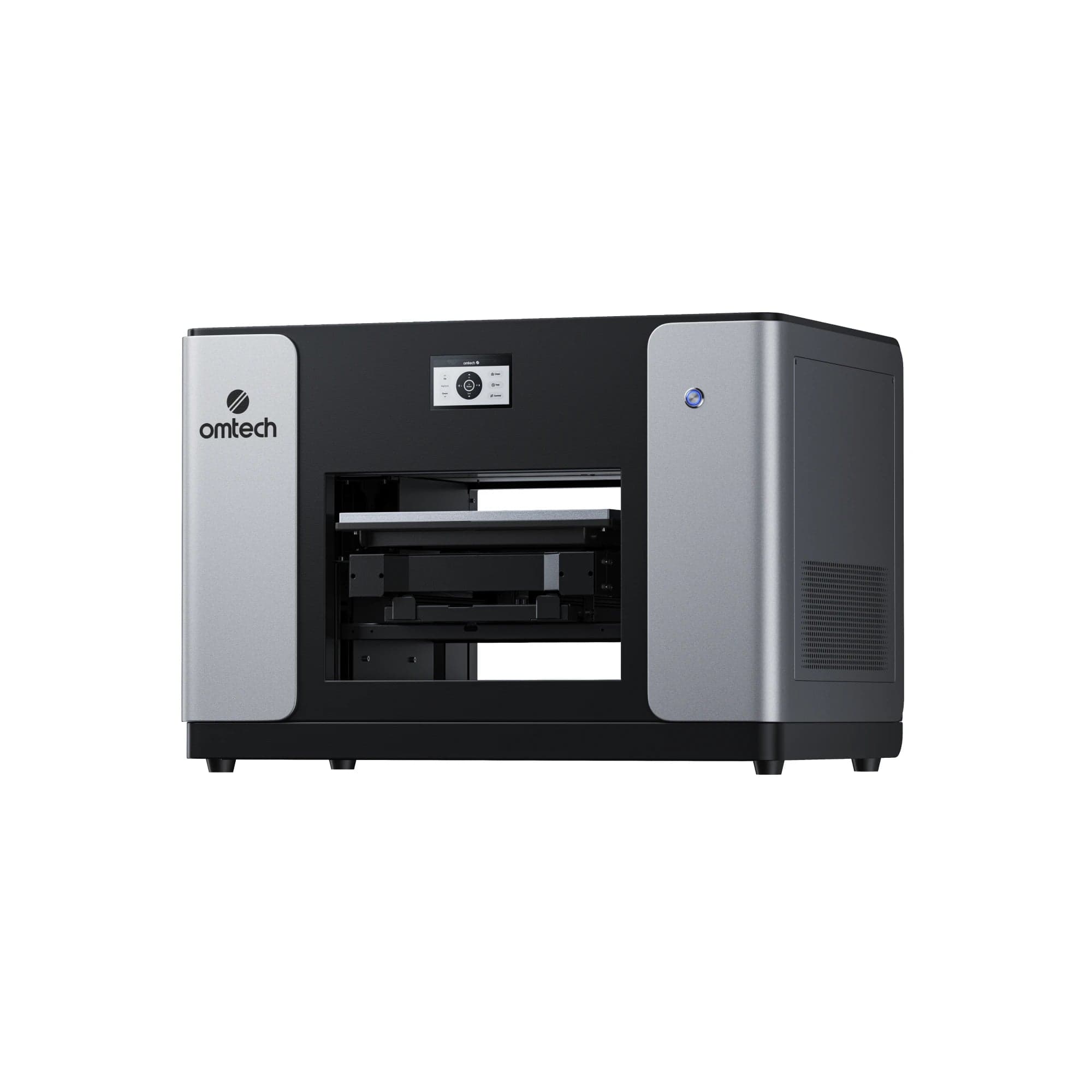
The conventional shop machine
OMTech Spectra A3+
Orderable$4,799.99
official dual-head variant with 3 L ink
Experienced shops that want conventional, owner-serviceable architecture and the largest A3+ bed.
Biggest risk: Size, cost, and a conventional maintenance burden.
What you can make
Flat full-color UV printing is table stakes on all six. The differences that eliminate machines outright: how big an object fits, how deep a texture goes, and whether the machine can build actual three-dimensional parts.
| xTool O1 Omni | eufyMake E1 | Morpho | HeyGears G1X Full-3D | Longer ePrint Dual | OMTech Spectra A3+ | |
|---|---|---|---|---|---|---|
| Flat print area | 330 × 122 mm std; 330 × 420 large bed | 330 × 420 mm | 330 × 220 enclosed + 420 × 330 A3 bed included | 420 × 330 mm | 310 × 420 mm | 350 × 450 mm |
| Object height | ≥150 mm | 130 mm | 168 mm | 130–150 mm by bed | — | 140 mm |
| Raised texture | 7 mm | 5 mm | 5 mm Std / 60 mm stacking on Pro | 10 mm (5 mm recommended) | 15 mm claimclaimed | 5 mm |
| True full-color 3D | No | No | Experimental — see ink axis | Yes — defined 420 × 330 × 130 mm build volume | No | No |
Bottom line: Need real 3D parts, HeyGears is the only defined system. Need tall objects or deep production texture, Morpho Pro. Need the biggest flat bed, OMTech. Everyone else competes within a few millimeters of each other.
How fast it produces
The one hardware choice that changes throughput roughly 2× is printhead class: the Epson F1080 (1,080 nozzles) versus the i3200 (3,200 nozzles). Every other published speed number mixes carriage speed, m²/h, sample times, and “× faster” claims without normalizing artwork or quality mode — they are not comparable.
| xTool O1 Omni | eufyMake E1 | Morpho | HeyGears G1X Full-3D | Longer ePrint Dual | OMTech Spectra A3+ | |
|---|---|---|---|---|---|---|
| Printhead class | F1080 (×2 on Dual) | F1080 familyderived | F1080 Std / i3200 Pro | F1080 (G1) / i3200 (G1X) — field-upgradeable head | Two heads, model undisclosedunknown | F1080 ×2 |
| Nozzles | 1,080/head | 1,080derived | 1,080 / 3,200 | 3,200 | — | 1,080/head |
| White/varnish allocation | Edition dependent | Single W channel | Pro: 2W+2V — double laydown per pass | 8 UV channels | 12 configurable | 2W + varnish |
Bottom line: Our bench data below proves the divide is real: Morpho Pro ran full-size color prints 1.9–2.1× faster than the O1 at higher dot density, and laid a full A3-class white underbase in 5:25 versus roughly half of the O1's 56-minute job. The i3200's doubled white/varnish channels matter more than headline DPI.
Ink: cost, freedom, and chemistry
The checkout price is the small number. Ink policy compounds over years — and the ink slots are also where each company's ambitions live, because changing what fluid goes in a channel changes what the machine is.
Locked: eufyMake (chipped cartridges) and xTool (no third-party support published). Open: Morpho (officially refillable, third-party allowed with warranty boundaries — ink-caused failures excluded), Longer (explicit third-party compatibility), OMTech (open tanks). Launch pricing where published: Morpho CMYK $0.108/mL and white/varnish $0.083/mL; O1 $0.112/mL across channels; HeyGears G1X CMYK $0.091/mL, white $0.077/mL, varnish $0.117/mL on campaign pricing ($0.111/mL blended for its 6 × 300 mL CMYKWV kit, rising to $0.183/mL at the $329 MSRP). G1X 3D resin is a separate material at $0.027-0.030/mL, or $0.027/mL in the 18 L mass-printing pack.
 Morphoclaimed
Morpho's chemistry roadmap
Experimental supported 3D swaps a soluble support ink into the black channel — print supports, dissolve them in water — pending third-party chemistry and a slicer that does not exist yet. Fluorescent varnish is described as a future V-channel replacement. Today these are promises on a wiki, not shipping workflows, but they are only possible because the channels are open.
 HeyGears G1X Full-3Dpartial
HeyGears' second material system
Rather than repurposing UV channels, the G1X adds a parallel system: 8 resin channels with a defined soluble-support workflow and a swappable material hub. Two realities from creators with beta hardware: switching between UV and 3D modes is physical surgery — swap the head module, ink delivery, and tubing (HeyGears says 5–10 minutes; FauxHammer took an hour), with no purge between modes by design. And the materials are open (no RFID chips, confirmed on camera) while the software is closed — third-party slicers are explicitly not allowed. Beta units printed small 3D models in 26–27 hours against a ~1.5-hour production-hardware claim.
Bottom line: If you print for revenue, ink freedom is the difference between a tool and a subscription. eufyMake trades that freedom for the only fully documented cost model — you know exactly what you will spend, which is its own kind of value.
Seeing the object
Printing on a phone case, a golf ball, or a batch of tumblers means the machine must know exactly where each object sits. The six machines use genuinely different sensing architectures with different failure modes — same claimed accuracy, different physics.
MorphoStereo cameras + structured light
Two 8 MP cameras plus an IR structured-light projector measure the object's actual 3D geometry — position and height together, multiple objects at once, ~0.2 mm claimed. Weakness: transparent, reflective, and glossy surfaces can defeat it, which is why a Snapshot fallback with HDR capture exists.
 xTool O1 Omni
Carriage-mounted line scanner
A CIS scanner rides the print carriage and images the bed like a flatbed scanner, paired with laser height sensing — ±0.2 mm claimed. Scanning geometry matches printing geometry, which is a genuinely clever way to eliminate camera-to-head calibration error.
 eufyMake E1
Camera + lasers
A single 8 MP overhead camera with dual lasers for height. Simpler and proven, but published placement accuracy is within 1 mm of camera calibration — a class behind the other two architectures on paper.
HeyGears uses line-scan imaging (details thin), Longer claims a 16 MP system in archived launch material, and OMTech has IR height sensing only — you position objects manually. On a $4,800 machine, that is a deliberate philosophy: precision through fixtures, not cameras.
Bottom line: Skeptic's note from our research: Morpho's stereo system is not automatically better than xTool's line scanner — the honest test is registration accuracy at the bed corners and at height, which is exactly what our bench plan measures.
Seeing the color
Every machine ships ICC profiles. Only one can measure whether the color that landed on the object is actually right.
MorphoclaimedThe only built-in spectrophotometer
Morpho closes the color loop: print a target, measure it in place, correct the profile — with G7 qualification and a ΔE < 1.5 claim. It is also coupled to machine health: Morpho's own docs note that missing nozzles degrade color, so the spectrophotometer, nozzle compensation, and maintenance form one system. The claim still needs bench verification on real substrates — a spectrophotometer does not guarantee ΔE < 1.5 on every object.
xTool Studio workflow profiles, eufyMake ColorMaestro, HeyGears custom ICC profiles, Longer “AI parameter optimization,” OMTech a “99% reproduction” claim with no published test method. All reasonable; none can verify their own output.
Bottom line: If you do brand-color work — logos, licensed products, repeat client jobs — closed-loop measurement is the difference between matching a Pantone and eyeballing it. For everyone else this axis barely matters.
Fixtures and production workflow
Repeat production lives or dies on fixturing — holding fifty tumblers in the same place print after print. Here the six split into two philosophies: closed accessory catalogs versus an open platform.
MorphopartialMorpho: jigs as an open platform
Published base-plate CAD (actually downloadable STP files), a build-your-own-jig tutorial aimed at people with a 3D printer and no engineering background, jig auto-recognition with per-jig saved layouts (select the Golf Jig and the golf-ball canvas just loads), Batch Fill for production runs, and a 12-pin powered jig connector — 24 V, UART, e-stop — for third-party powered fixtures. Honest framing: the “SDK” today is that connector and a promise; the software API has no docs, no GitHub, no committed timeline.
xTool O1 OmnixTool: the broadest closed catalog
OR1 rotary, RF1 roll feeder, LM1 laminator, and a multi-edition roadmap — the deepest accessory ecosystem of the six, all first-party and closed. If the accessory you need exists, this is the low-friction path; if it doesn't, you wait for xTool to build it.
eufyMake, HeyGears, and Longer each offer rotary and roll/conveyor attachments of varying documentation depth. OMTech documents rotary and crystal-label workflows in its manual while the branded accessories are still “upcoming” — and has no continuous-feed option published.
Bottom line: Batch producers should choose between the two philosophies deliberately: xTool's catalog solves today's known jobs; Morpho's open platform bets you will need fixtures nobody sells.
Keeping it alive
A UV printer is a liability when idle — wet ink paths clog. The maintenance architecture, not the print samples, determines whether you own a printer or a brick in month six. These are genuinely different systems, not different settings.
MorphopartialMorpho: no maintenance fluids at all
All six slots are ink — no cleaner, no moisturizer. Instead: 24/7 white circulation and stirring, damper agitation, ink-path heating, periodic ink spitting, a replaceable wiper cloth, and Smart Maintenance software that machine-reads its own nozzle test, runs recovery loops, and applies nozzle compensation automatically. Claimed routine cost: ~1 mL of ink per week. The catch: the owner-maintenance wiki page is literally “Content in Preparation” — no schedule, no safe idle duration, no storage procedure. Best idle evidence so far is preproduction units printing after 8 idle days and ~3 weeks.
eufyMake E1documentedeufyMake: the fluid regime, fully documented
Cleaner + moisturizer + a combined maintenance/waste cartridge, with published timing logic (10-minute idle flash, 12-hour pre-print trigger, 24-hour moisturizer, 72-hour deep clean) and even documented return-to-ready arithmetic: about 16.5 minutes using 9 mL ink, 22 mL cleaner, and 8 mL moisturizer. The highest ongoing fluid cost of the six — and the only machine where you can compute that cost before buying.
xTool O1 OmnidocumentedxTool: SmartCycle, multiplied by edition
SmartCycle 2.0 automatic cleaning with moisturizer and replaceable waste cartridges — one set per head, so Dual and DT+UV editions carry two wet paths and roughly double the consumable maintenance surface. A cost multiplier invisible at checkout.
 OMTech Spectra A3+documented
OMTech: the conventional wide-format regime
Moisturizing fluid, cap and wiper service, an owner-emptied waste bottle, and a 12-hour automatic cycle — the most manual burden of the six, inherited from commercial flatbed practice, with every procedure documented.
HeyGears describes heating, agitation, and cleaning after three idle days; Longer says “self-cleaning” and publishes nothing else — no cadence, no fluid use, no manual. On the axis that most determines long-term ownership, Longer is a black box.
Bottom line: The spectrum runs automated-and-unproven (Morpho) to manual-and-documented (OMTech). Every individual mechanism exists somewhere else — xTool advertises white circulation, HeyGears head heating, eufyMake auto-cleaning. Morpho's differentiator is the integration plus zero fluid consumables, and it is exactly the claim our long-term testing exists to check.
When it breaks — and buying risk
What a manufacturer says and what its manuals let you hold it to are different facts. Documentation depth is the best available proxy for what ownership will be like when something goes wrong — and the purchase itself carries different risk depending on what kind of number the price is.
| xTool O1 Omni | eufyMake E1 | Morpho | HeyGears G1X Full-3D | Longer ePrint Dual | OMTech Spectra A3+ | |
|---|---|---|---|---|---|---|
| Buying risk | Pre-order | Shipping retail | Live Kickstarter; Dec 2026–Jan 2027 fulfillment | Kickstarter to Sep 11; ships Dec 2026 (G1X) / Mar 2027 (G1) — latest of the six | Pre-order | Orderable retail |
| Owner-service depth | Head video, pads, filters; safety manual contradictsconflicted | Head module, station, cables, beds — deepest field-replacement docsdocumented | Software prompts exist; public procedures are placeholderspartial | No service manual yetunknown | No public manual at allunknown | Dampers, tubes, lamps, belts, sensors — full conventional detaildocumented |
| Head warranty / life | 3 months | 3 months | Unpublished; est. F1080 3–6 mo, i3200 12–24 moclaimed | 180 days; user-replaceable, i3200 ~$1,299 / F1080 ~$299documented | — | 1 month |
| Documentation confidence | High | Highest | Medium, improving — 55-page living wiki, service gaps | Preproduction | Low | High |
Bottom line: If downtime costs you money, weight this axis heavily: eufyMake and OMTech are the machines you can actually fix from public documentation today. Both crowdfunded machines ask you to trust documentation that is still being written.
Bench-tested: Morpho Pro vs xTool O1 Omni
Everything above comes from manufacturer publications. This section is different: same artwork printed on both machines in our shop, with times from actual device durations and ink from firmware job reports, RIP files, and G-code. Ink cost uses Morpho EcoInk launch pricing (CMYK $0.108/mL, W&V $0.083/mL) and O1 ink at $13.99/125 mL ($0.112/mL).
Resolution matching matters: the O1's quality setting only changes its color plane (Fast 720×540, Standard 720×720, High 720×1440), while Morpho's lowest mode is 720×1200 — Morpho's “low” is nearly the O1's “High.” Rows pair Morpho 720×1200 with O1 High where that capture exists and flag the mismatch (†) where it doesn't.
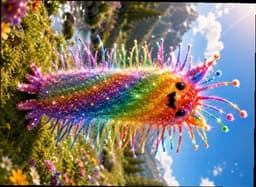
Small creature — ~71 × 53 mm on ceramic tile
| Job | Morpho mode | O1 mode | Morpho time | O1 time | Faster | Morpho mL | O1 mL | Morpho cost | O1 cost | |
|---|---|---|---|---|---|---|---|---|---|---|
 | White + color | 720×1200 | High (720×1440) | 3:24 | 5:07 | Morpho by 34% | 0.235 | 0.132 | $0.021 | $0.015 |
| White + color | 720×1200 | Standard (720×720)† | 3:24 | 3:56–3:59 | Morpho by ~14% | 0.235 | 0.127–0.195 | $0.021 | $0.014–0.022 |
 | White + color + varnish | 720×1200 | Standard (720×720)† | 5:08 | ~5:40 | Morpho by ~9% | 0.408 | — | $0.036 | — |
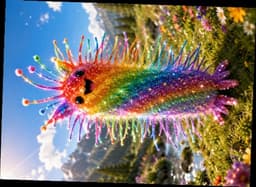 | Color only | 720×1200 | Standard (720×720)† | 2:10 | 1:33 | O1 by 28% | 0.070 | 0.038 | $0.008 | $0.004 |
 | Color only, max quality | 1440×2400 | — beyond O1 ceiling | 3:28 | — | — | 0.078 | — | $0.008 | — |
Large photos — ~299 × 397 mm, same artwork
| Job | Morpho mode | O1 mode | Morpho time | O1 time | Faster | Morpho mL | O1 mL | Morpho cost | O1 cost | |
|---|---|---|---|---|---|---|---|---|---|---|
 | Remy — color only, metal | 720×1200 | Standard (720×720) | 5:34 | 11:36 | Morpho 2.1× | 2.142 | ~1.24 | $0.23 | ~$0.14 |
 | Ollie — color only, wood | 720×1200 | Standard (720×720) | 6:18 | 11:52 | Morpho 1.9× | 2.491 | 1.291 | $0.27 | $0.14 |
 | Ollie — white + color (two attempts), wood | W→C · 720×1200 | (nearest: Remy W+C+V Std) | 11:30‡ | 56:38‡ | see note | 8.325 | 6.621 | $0.75 | $0.78 |
What the numbers say so far
- Large-format speed
- Morpho ~1.9–2.1× faster on full-size color prints, at ~1.7× higher color dot density, on slightly smaller artwork.
- White-layer speed
- Morpho laid a full ~299×397 mm white underbase in 5:25; the O1's full-bed white layer alone accounts for roughly half of its 56-minute W+C+V print.
- Small-print speed
- Morpho wins white/varnish jobs (9–34%); the O1 wins small color-only prints (28%) at its lower color density.
- Ink volume
- Morpho deposits ~1.9–2× more ink for the same artwork — denser laydown, especially white (5.87 vs ~2.7 mL).
- Ink cost per print
- Nearly a wash: Morpho's ~2× volume is offset by cheaper white/varnish. Both machines print full-bed photos for ~$0.15–0.75.
- Estimate honesty
- Morpho Studio times ran 4–66% over its estimates and its ink estimator under-reports ~2.15×; O1 numbers came from RIP files and G-code, not estimates.
‡ The Morpho white + color print took two attempts: the first job deposited the complete white underbase (5:25, 5.87 mL) then failed on a stuck door; a color-only retry (6:05, 2.45 mL) printed over the retained white — 11:30 is machine time across both. The O1 reference is its full-bed W+C+V Standard print, which includes an extra varnish layer, so read it as context rather than a matched race. Cumulative cartridge counters validate the combined Morpho ink within 0.18%. All Morpho jobs: Studio Beta 0.12.2 on a preproduction Morpho Pro. Print images are the machines' own job previews.
So which one is yours?
Work down the list — the first line that describes you is your machine.
HeyGears G1X Full-3D
You need actual full-color 3D parts with soluble supports — nothing else does this.
eufyMake E1
You want the lowest-risk entry: shipping now, best-documented costs and repairs, guided maintenance.
Morpho
You run production and value throughput, open ink, custom fixtures, and measured color — and can tolerate crowdfunding maturity.
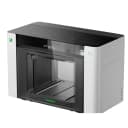
xTool O1 Omni
You want the deepest first-party accessory ecosystem and line-scan placement.
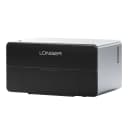
Longer ePrint Dual
You are an experienced operator who wants the cheapest open dual-head platform and will own the integration yourself.
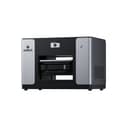
OMTech Spectra A3+
You run a shop, want the biggest bed and conventional serviceability, and prefer fixing machines to trusting automation.
Appendix: the full spec grid
Every field from our cross-machine research, for readers who want the complete picture. Evidence badges mark cells where a number is derived, claimed, conflicted, or simply unpublished.
▸What each machine can make
| xTool O1 Omni | eufyMake E1 | Morpho | HeyGears G1X Full-3D | Longer ePrint Dual | OMTech Spectra A3+ | |
|---|---|---|---|---|---|---|
| Primary process | Piezo UV inkjet | Piezo UV inkjet | UV flatbed inkjet | UV inkjet + UV-resin material jetting | Dual-head UV inkjet | A3+ UV flatbed inkjet |
| Workflows | UV, UV DTF; DTG + DTF on DT+UV edition | UV direct, UV DTF | UV direct, relief, print + cut; UV DTF with optional roll-to-roll; experimental 3D paths | UV direct, relief, volumetric full-color 3D | UV direct, UV DTF, DTF, DTG | UV direct, gloss, relief, reverse printing, crystal-label transfer |
| Flat print area | 330 × 122 mm std; 330 × 420 mm large bed | 330 × 420 mm | 330 × 220 mm enclosed; 420 × 330 mm included A3 bed | 420 × 330 mm | 310 × 420 mm | 350 × 450 mm |
| Object / media height | ≥150 mm (archived announcement) | 130 mm | 168 mm | 150 mm mini bed; 130 mm full-3D bed | — | 140 mm |
| Raised texture | Up to 7 mm | Up to 5 mm | Std 5 mm; Pro up to 60 mm stacking | Up to 10 mm; 5 mm recommended | Up to 15 mm (claim)claimed | Up to 5 mm |
| Object texture scanning (scan-to-relief) | None published | None published | ReliefScan — stereo cameras + IR structured light capture color and height into an editable 2.5D height field; oil-painting scan announced | None published — sensors handle alignment and layer QC only; relief files must be user-suppliedderived | None published | None published |
| Volumetric full-color 3D | No | No | Pro stacks unsupported structures; supported geometry experimental | Yes — defined resin jetting with soluble supports | No | No |
| Full-3D build volume | — | — | — | 420 × 330 × 130 mm | — | — |
Raised UV texture is not volumetric 3D printing. Only the HeyGears package advertises a defined UV-resin material-jetting build volume with a soluble-support workflow.
▸Print engine and ink
| xTool O1 Omni | eufyMake E1 | Morpho | HeyGears G1X Full-3D | Longer ePrint Dual | OMTech Spectra A3+ | |
|---|---|---|---|---|---|---|
| Printhead | Epson F1080; one or two by edition | F1080 family (firmware-derived)derived | F1080 (Std) / Epson i3200 (Pro) | Epson i3200 | Two heads; model undisclosedunknown | Epson F1080 × 2 |
| Nozzles | 1,080 per head | 1,080 (firmware-derived)derived | 1,080 / 3,200 | 3,200 | — | 1,080 per head |
| Max stated resolution | 720 × 1440 dpi | 1440 dpi | 1440 / 2400 dpi | 1440 × 2400 dpi | 1440 dpi | 720 × 1440 dpi |
| Ink channels | Edition dependent | K/C/M/Y/W/Gloss | Std 6 (CMYK+W+V); Pro 8 (CMYK+2W+2V) | 8 UV + 8 resin | 12 configurable channels | CMYKWW + varnish |
| Open / third-party ink | No third-party support published | No — chipped cartridges | Yes — officially refillable | Refillable claim; qualification unclearclaimed | Yes — explicit third-party compatibility | Yes — open tanks |
| Included ink capacity | 125 ml std; 290 ml high-cap white on higher editions | 6 × 100 ml + cleaner/moisturizer/waste set | 130 ml CMYK; 290 ml white/varnish | 8 × 1 L full-3D station | 12 × 200 ml starter | 250 ml tanks |
Speed claims are deliberately not ranked: manufacturers mix carriage speed, m²/h, sample times, and relative “× faster” claims without normalizing artwork, pass count, or quality mode. See the bench-tested section below for measured numbers.
▸Alignment, software, and production
| xTool O1 Omni | eufyMake E1 | Morpho | HeyGears G1X Full-3D | Longer ePrint Dual | OMTech Spectra A3+ | |
|---|---|---|---|---|---|---|
| Alignment system | Pixel-Scan CIS imaging + laser sensing | 8 MP camera + dual lasers | Dual 8 MP stereo cameras + IR structured light | Line-scan imaging | 16 MP (archived launch source)claimed | IR height sensing only; manual positioning |
| Placement accuracy | ±0.2 mm | Within 1 mm camera calibration | ~0.2 mm | — | — | — |
| Color management | xTool Studio workflow | ColorMaestro | Built-in spectrophotometer; G7 / ΔE < 1.5 claimclaimed | Custom ICC profiles | AI parameter optimizationclaimed | 99% reproduction claim; method unpublishedclaimed |
| Primary software | xTool Studio | eufyMake Studio | Morpho Studio + SDK | HeyVerse + Blueprint Studio | Longer AI design studio | OMTech Print |
| Rotary | OR1 Rotary | Rotary attachment | Rotary jig | Rotary attachment | Rotary mode / kit | Documented in manual; branded accessory upcomingpartial |
| Continuous feed | RF1 roll feeder | Roll-to-film | Roll-to-roll + A3 bed | Roll-to-film + conveyor | Roll-to-roll + conveyor | None publishedunknown |
| Automatic maintenance | SmartCycle 2.0 | JetClean | White circulation, wiper, heat, nozzle compensation | White agitation, heat, idle cleaning | “Self-cleaning”; details unpublishedclaimed | 12-hour cycle, white circulation, moisturizing fluid |
▸Ownership: what the manuals actually say
This is where marketing pages go quiet. Each cell is labeled by evidence quality: documented means a published manual or support procedure, derived means arithmetic from documented facts, claimed means manufacturer architecture without a public procedure, conflicted means first-party sources disagree, and unknown means no comparable public detail exists. Documentation depth is not a reliability score — but it is what you can hold a company to.
| xTool O1 Omni | eufyMake E1 | Morpho | HeyGears G1X Full-3D | Longer ePrint Dual | OMTech Spectra A3+ | |
|---|---|---|---|---|---|---|
| Maintenance cadence | Nozzle check each print; standard/deep cleaning; daily UV-lamp cleaningdocumented | 10-min idle flash, 12-hr pre-print, 24-hr moisturizer, 72-hr deep-clean logicdocumented | Smart Maintenance software sequence documented; cadence and ~1 mL/week use are claimspartial | Heat/agitation, cleaning after 3 idle days, standby moisturizingclaimed | “Self-cleaning”; cadence and fluid use unpublishedclaimed | 12-hr automatic cycle plus regular head, cap/wiper, table, waste caredocumented |
| Maintenance chemistry | Moisturizer/waste system; edition dependent | Cleaner + moisturizer + maintenance cartridge | No cleaner/moisturizer; ink spitting, circulation, cloth wipe | Standby moisturizing; details incompleteunknown | Details incompleteunknown | Moisturizer, cap/wiper, waste bottle |
| Waste system | 1–2 replaceable waste cartridges; capacity unpublishedpartial | Integrated in maintenance cartridge; 125 ml initialdocumented | Unpublishedunknown | Unpublishedunknown | Unpublishedunknown | Owner-emptied container; capacity unpublishedpartial |
| Idle / storage state | Powered standby/sleep protects the headdocumented | Stay powered; explicit 7.5-min moisturizing shutdown for storagedocumented | Stay powered; approved multiweek unpowered storage not publicpartial | Powered standby with automatic maintenanceclaimed | Unpublishedunknown | Operating section says powered standby; safety text says unplug after useconflicted |
| Owner-service procedures | Head video, pads, scrapers, foam, filter; safety manual also says non-user-serviceableconflicted | Head module, station, scraper/pad, ribbon cable, beds, panelsdocumented | Software shows part status/prompts; public procedures still placeholderspartial | Final service manual unavailableunknown | Box manual not publicunknown | Dampers, cables, tubes, lamps, cap/wiper, waste, belts, sensor diagnosisdocumented |
| Documentation confidence | High for operation, health monitoring, consumables | Highest for operating economics and field replacement | Medium and improving — 55-page living wiki; safety/service sections incomplete | Preproduction — architecture detailed, procedures are not | Low — no public instruction or service manual | High for conventional setup, maintenance, troubleshooting |
▸Physical and warranty
| xTool O1 Omni | eufyMake E1 | Morpho | HeyGears G1X Full-3D | Longer ePrint Dual | OMTech Spectra A3+ | |
|---|---|---|---|---|---|---|
| Dimensions | 714 × 374 × 469 mm | 590 × 250 × 407 mm | 660 × 430 × 390 mm | 580 × 660 × 510 mm | 650 × 445 × 330 mm | 780 × 575 × 560 mm |
| Net weight | 40.6–41.1 kg | 20 kg | ~32 kg | 25 kg printer; 45 kg with resin station | 30 kg | 69.4 kg |
| Max object load | — | 1.5 kg | 10 kg | 6 kg | — | — |
| Machine warranty | 12 months excl. printhead | 1 year | 1 year; head/ink-path exclusions still incomplete | 1 year (campaign/store terms) | — | 1 year excl. ink-contact parts |
| Printhead warranty | 3 months (original head) | 3 months | — | 180 days; i3200 ~$1,299 replacement | — | 1 month |
| Ink safety claim | GREENGUARD Gold UV ink | Certification logos shown; standards not enumeratedclaimed | GREENGUARD Gold EcoInk | Low-volatility claim; certification unpublishedclaimed | — | GREENGUARD Gold ink; CE/FCC/RoHS/TUV machine |
Read the prices carefully
- Prices are different kinds of numbers — retail, pre-order, and crowdfunding campaign references — and are not equivalent checkout offers.
- HeyGears here means the G1X Full-3D Pack at its live Kickstarter price of $3,599 (G1 Starter $1,999, G1X Starter $3,299, Deluxe $4,999). Earlier $1,699/$2,999/$3,299 figures were pre-launch deposit prices HeyGears' own site still shows in places. The campaign passed $14.6M from 3,400+ backers — from a company that has never shipped a UV printer.
- Two manufacturers contradict themselves: HeyGears publishes both 10–30 μm and 10–20 μm full-3D layers (spec tables and creators with hardware say 10–20 μm; the marketing prose is the outlier); OMTech's manual says 1 m²/h at 8-pass while its product page says up to 2.4 m²/h. We keep conflicts visible instead of silently resolving them.
- Manufacturer statements are claims, not Machines for Makers bench-test results — except the Morpho vs O1 section, which is measured on our machines.
More from this research
- UV printer research hub — everything we have published on the 2026 desktop UV wave.
- The patent timeline — why this category exists in 2026 and not in 2019.
- F1080 vs i3200 — the component choice behind most of the differences above.
- How UV printing actually works — the physics under the spec sheets.